How to Interpret Nutritional Information and Ingredient Lists on Packaged Food Labels in the United Kingdom
Educational content only. No promises of outcomes.
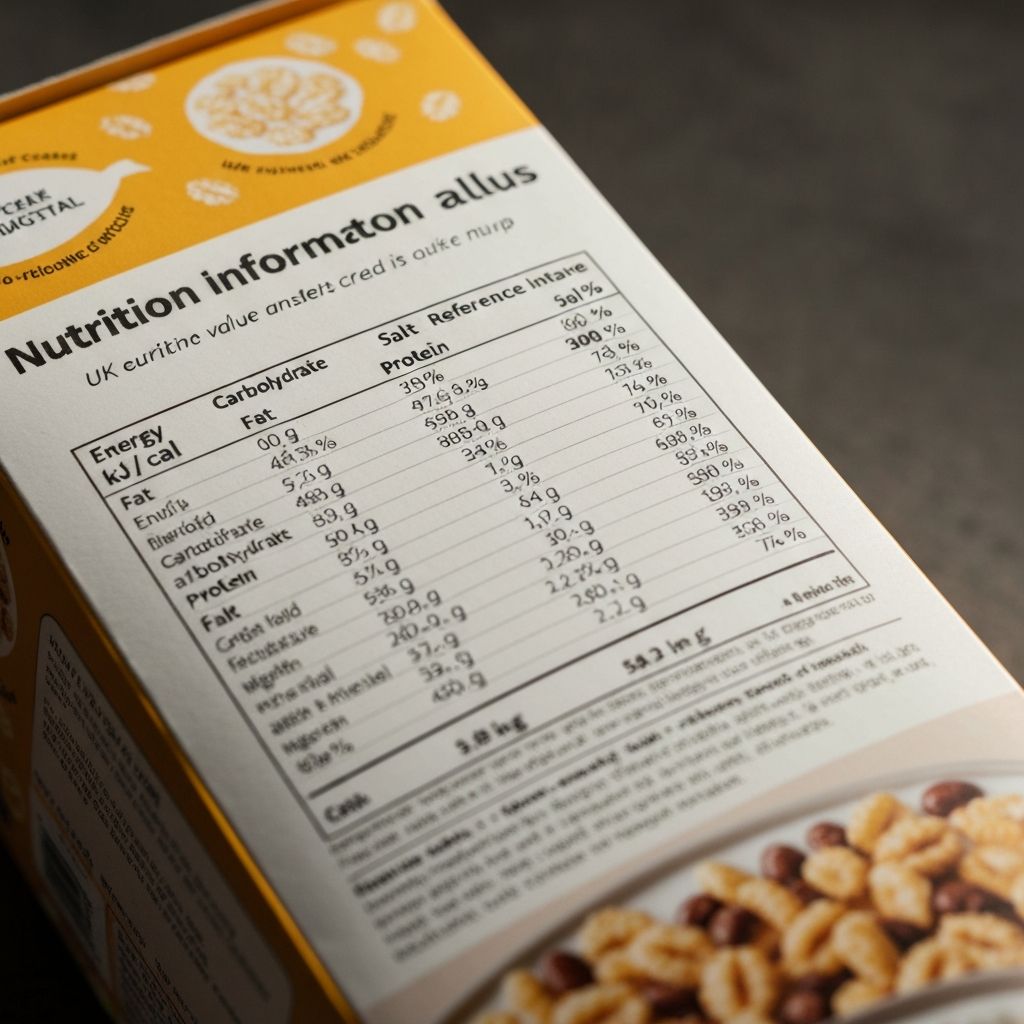
Mandatory Nutrition Information Panel
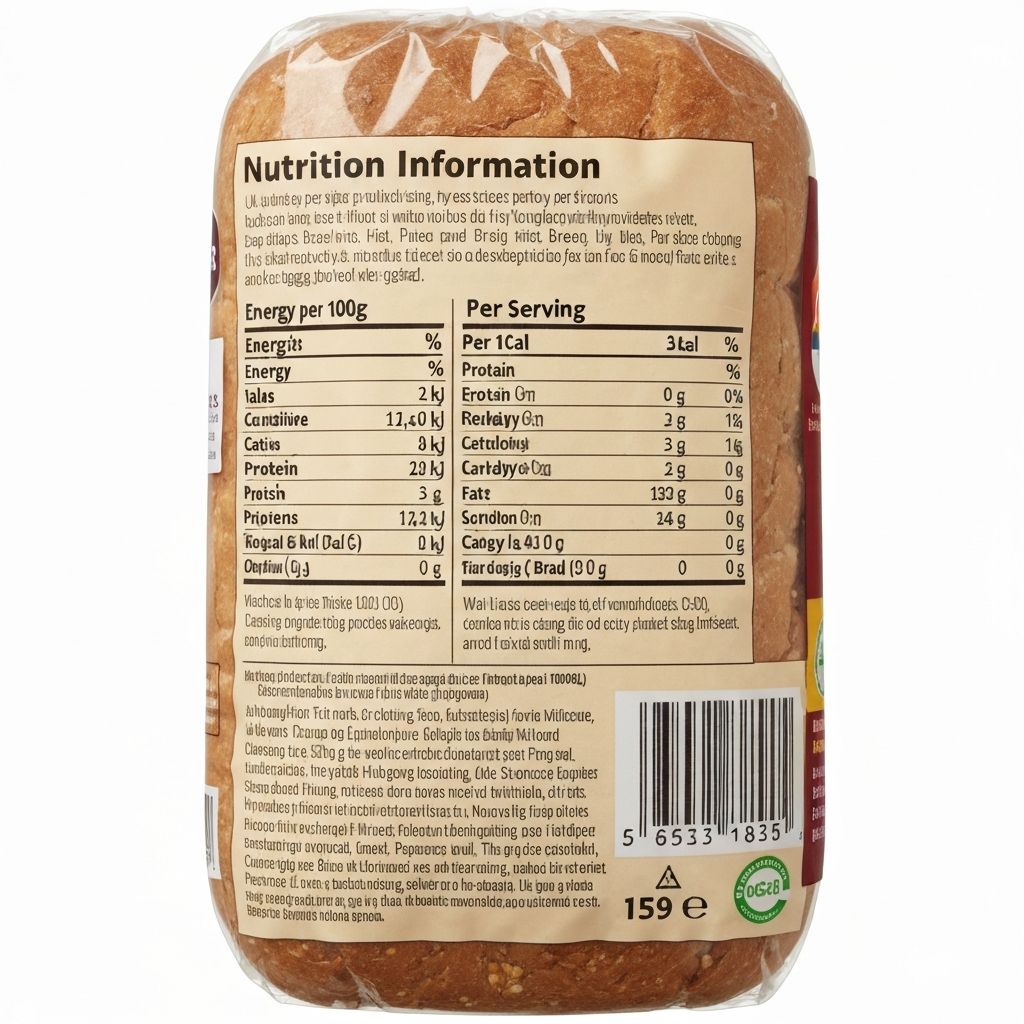
All packaged foods sold in the United Kingdom must display a nutrition information panel on the back of the packaging. This panel provides standardised information about energy content and key nutrients.
The panel includes two columns: one showing values per 100 grams or 100 millilitres, and another showing values per serving or per portion. This dual display allows consumers to understand nutrient content relative to their consumption patterns.
Energy (Kilojoules and Kilocalories)
Energy is measured in both kJ (kilojoules) and kcal (kilocalories). This reflects the amount of energy your body can obtain from consuming the food.
Macronutrients
The panel displays fat (including saturates), carbohydrate (including sugars), fibre, protein, and salt. These are the key nutrients regulated in UK food labelling.
Reference Intake (RI) Percentages
Reference Intake percentages indicate how much of the recommended daily intake a serving of the food provides. These percentages are based on an average adult consuming 2000 kcal per day.
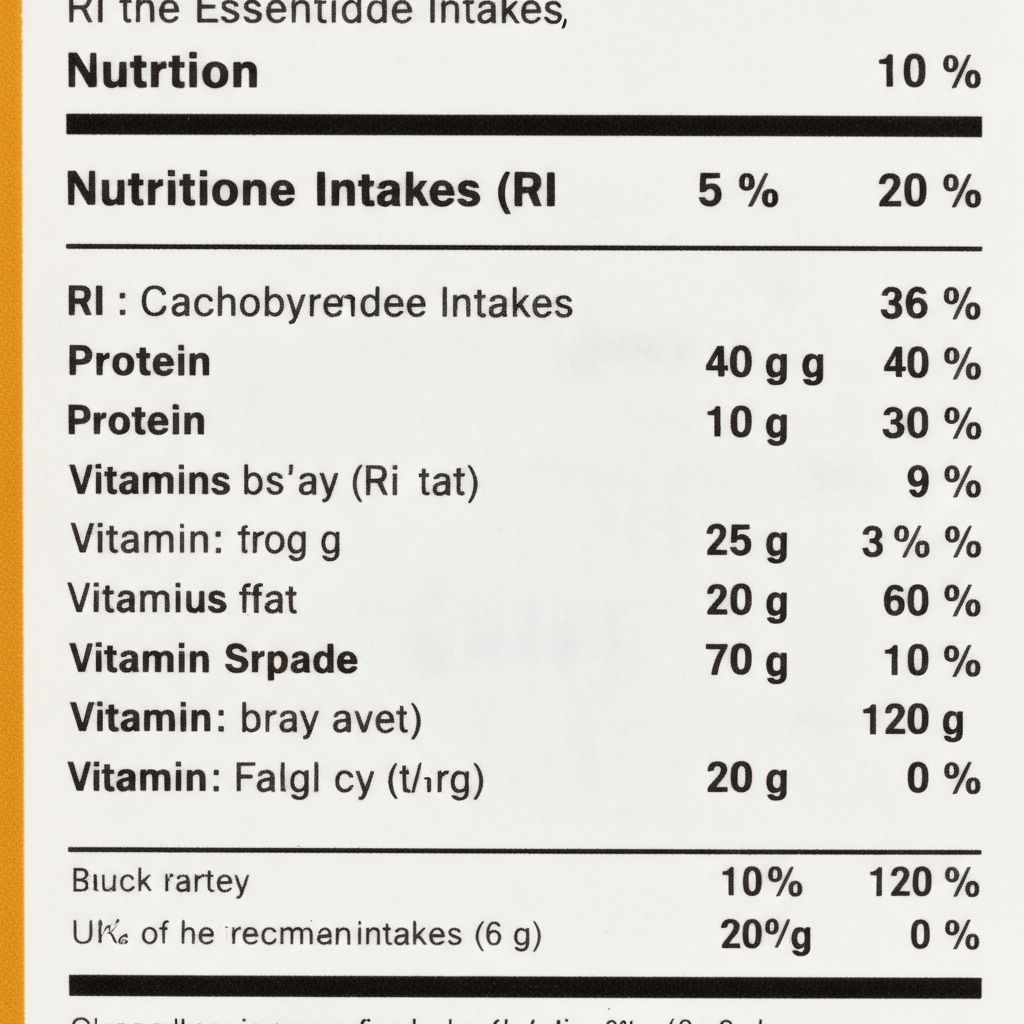
The %RI is calculated by dividing the nutrient amount per serving by the reference value and multiplying by 100. For example, if a serving contains 8 grams of salt and the reference value is 6 grams, the %RI is approximately 133%.
Front-of-Pack Traffic-Light Labelling
Many UK food manufacturers use the traffic-light labelling system on the front of packaging. This system uses colour coding—red, amber, and green—to quickly indicate nutrient levels.
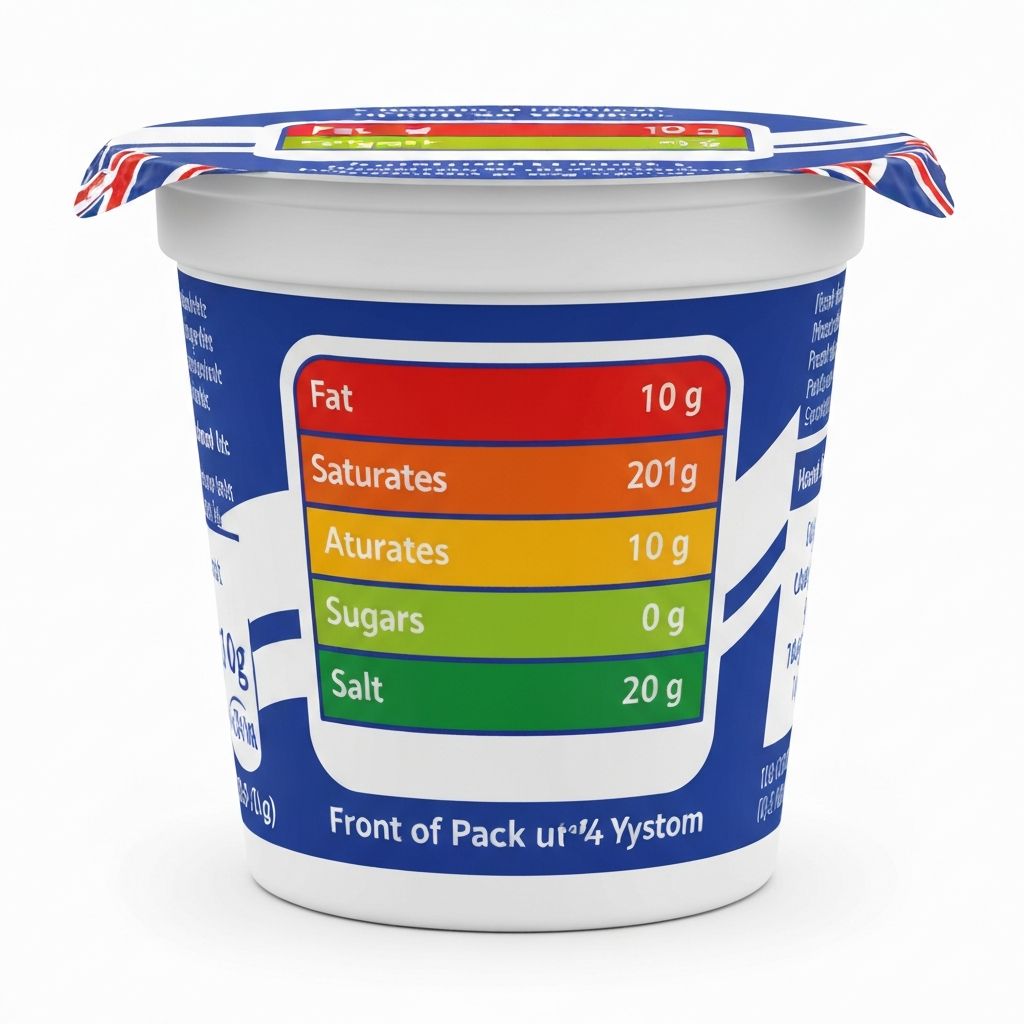
| Nutrient | Green (Low) | Amber (Medium) | Red (High) |
|---|---|---|---|
| Fat per 100g | 3g or less | 3g to 17.5g | More than 17.5g |
| Saturated Fat per 100g | 1.5g or less | 1.5g to 5g | More than 5g |
| Sugars per 100g | 5g or less | 5g to 15g | More than 15g |
| Salt per 100g | 0.3g or less | 0.3g to 1.5g | More than 1.5g |
Ingredients List Rules
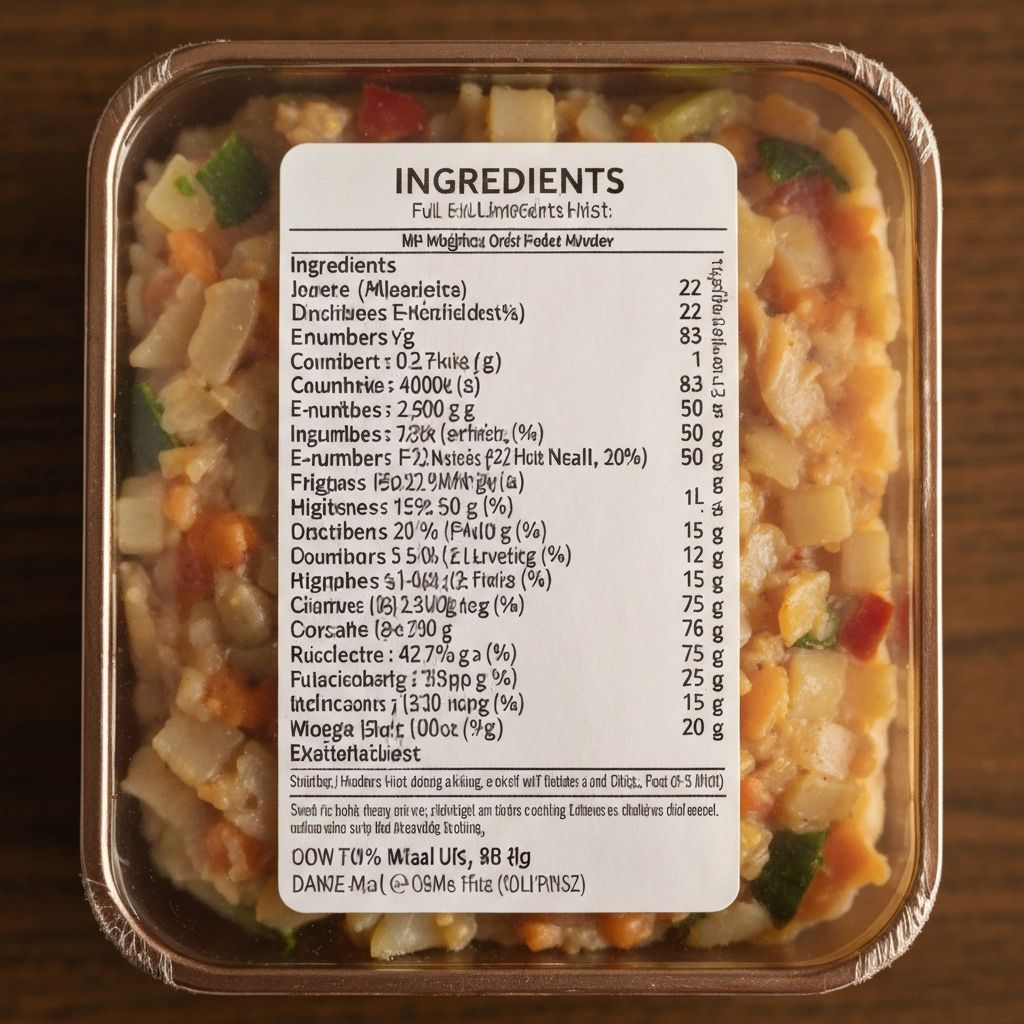
The ingredients list on a food label must follow specific UK and EU regulations. Ingredients are listed in descending order of weight, meaning the ingredient present in the largest quantity appears first.
Additives and E-Numbers
Additives must be identified by either their functional name (such as "emulsifier" or "preservative") and either an E-number (EU numbering system) or the specific name of the additive. For example, "E330" or "citric acid" indicates an acidity regulator.
Compound Ingredients
When a food contains a compound ingredient (such as chocolate chips within a cake mix), that compound ingredient may be identified by name, followed by its own ingredients list in brackets.
Allergen Declaration Requirements
UK regulations require that 14 major allergens be clearly highlighted in the ingredients list. These allergens must be emphasised through bolding, italics, or a different colour.
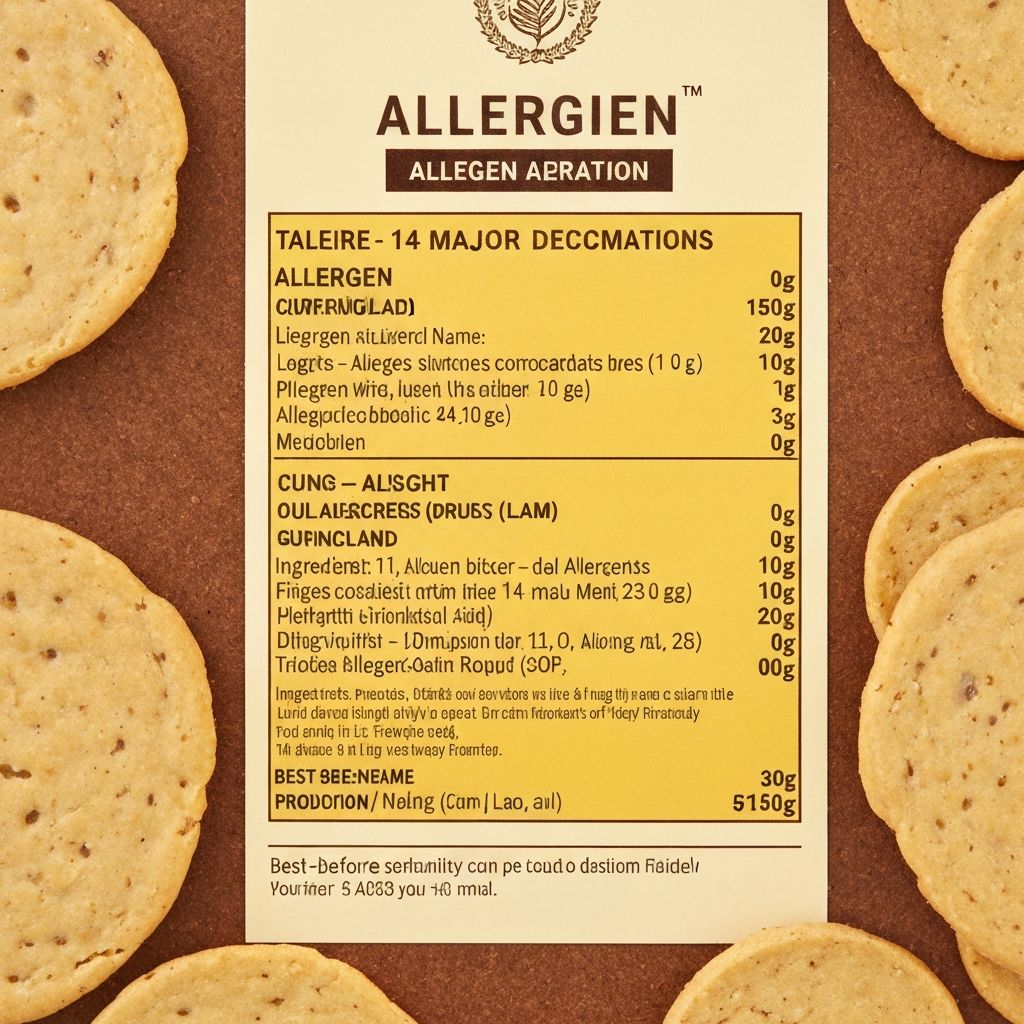
The 14 major allergens are:
- Celery
- Cereals containing gluten (wheat, barley, rye, oats)
- Crustaceans
- Eggs
- Fish
- Lupin
- Milk
- Molluscs
- Mustard
- Nuts (almonds, hazelnuts, walnuts, cashews, pecans, pistachios, Brazil nuts, macadamia nuts)
- Peanuts
- Sesame
- Soya
- Sulphites (if present in concentrations above 10 mg/kg)
Common Marketing Terms and Legal Definitions
Food packaging often displays marketing claims such as "natural," "light," "low-fat," or "reduced." These terms have specific legal definitions under UK and EU regulations.
Natural
The term "natural" has no standardised legal definition in UK food labelling. The use of this term is not strictly regulated, making it a marketing term rather than a protected claim.
Light or Lite
"Light" requires at least a 30% reduction in a nutrient compared to the standard product. The specific nutrient must be declared.
Low-Fat
A product can claim "low-fat" if it contains no more than 3g of fat per 100g (or 1.5g per 100ml for liquids).
Reduced
"Reduced" indicates at least a 25% reduction in a specific nutrient compared to the original product formula.
Source of
A product claiming to be a "source of" a nutrient must contain at least 12% of the Reference Intake per 100g.
High In
"High in" requires at least 20% of the Reference Intake per 100g.
Ultra-Processed Food Identification
Ultra-processed foods can often be identified by examining the ingredients list. These foods typically contain multiple additives, preservatives, emulsifiers, and ingredients with unfamiliar names.
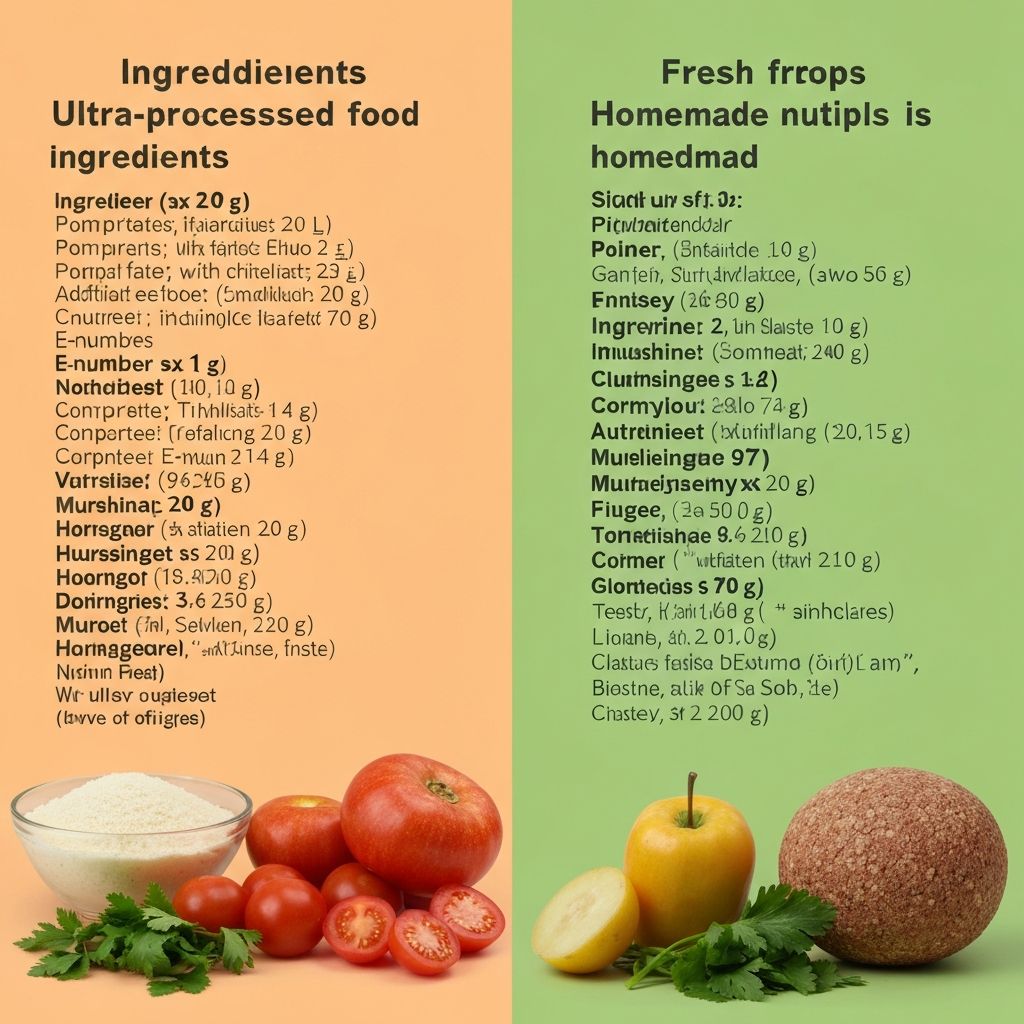
General patterns that may indicate ultra-processing include:
- Long ingredient lists with many chemical-sounding names
- Frequent use of additives (E-numbers)
- Presence of hydrogenated oils or trans fats
- Multiple sweeteners (sugar, high-fructose corn syrup, artificial sweeteners)
- Colourings and flavourings listed separately
Frequently Asked Questions
"Per 100g" provides a standardised comparison across all similar products. "Per serving" shows the nutrient content in the portion size manufacturers recommend. Comparing per 100g values allows you to compare products fairly, while per serving values reflect what you are likely to consume.
E-numbers represent approved food additives in the EU and UK. All additives with E-numbers have undergone safety evaluations. However, the presence of many E-numbers may indicate a more processed product.
Green indicates a low level of a nutrient per 100g. Amber indicates a medium level. Red indicates a high level. These thresholds apply to fat, saturated fat, sugars, and salt. The colours provide a quick visual reference for nutrient density.
The %RI shows how much of the recommended daily intake a serving provides, based on an average adult consuming 2000 kcal per day. A serving providing 50% RI of a nutrient means it contains half of the recommended daily amount.
Bolding allergens makes them easier to identify at a glance, reducing the risk of accidental consumption by people with allergies. UK law requires the 14 major allergens to be highlighted in this manner.
Front-of-pack traffic-light labelling provides a quick overview, but the detailed nutrition information panel on the back offers complete information. Using both together gives you a fuller picture of the product's nutritional profile.
Related Articles
Understanding the Nutrition Information Panel
Detailed breakdown of per 100g vs per portion values and how to use them.
Read More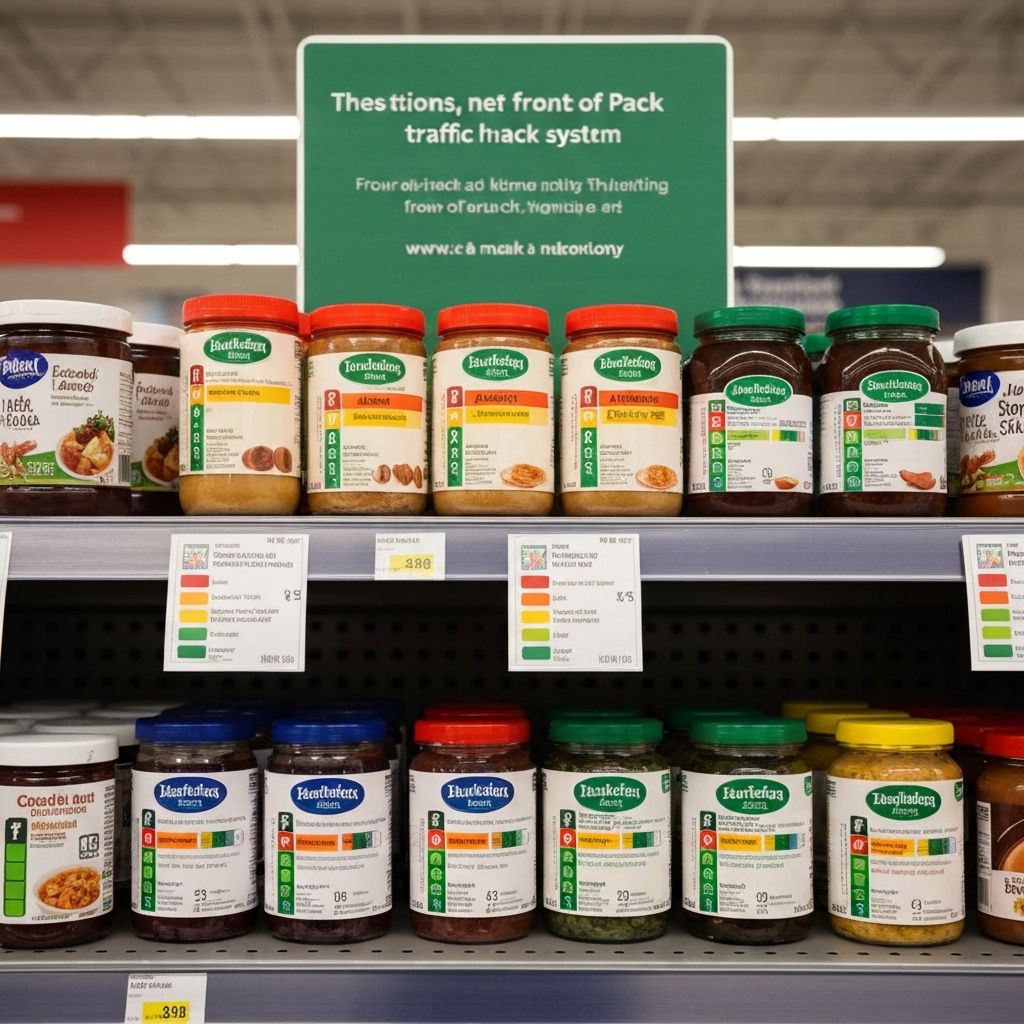
How to Read Traffic-Light Colours
Understanding the colour coding system and nutrient thresholds.
Read More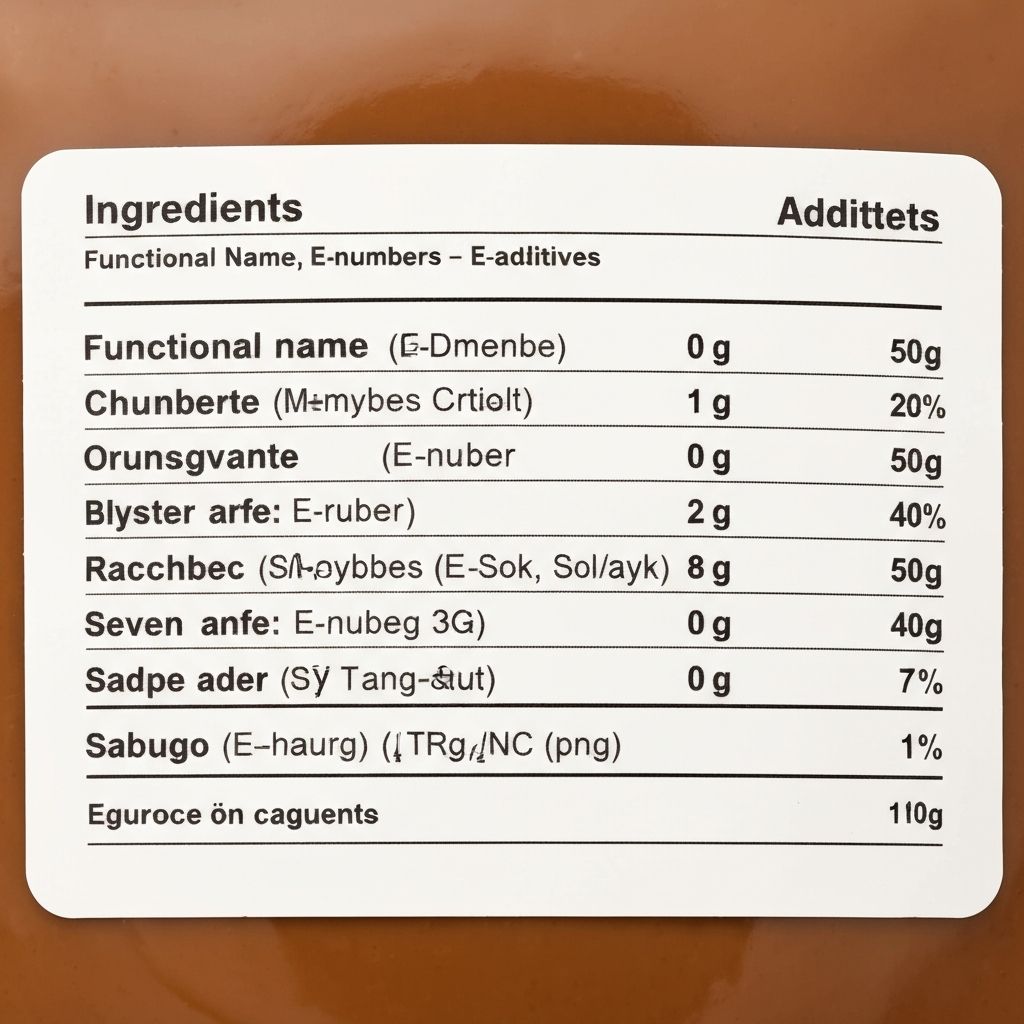
Ingredients List and Additives Explained
How to read ingredient order and identify E-numbers and additives.
Read More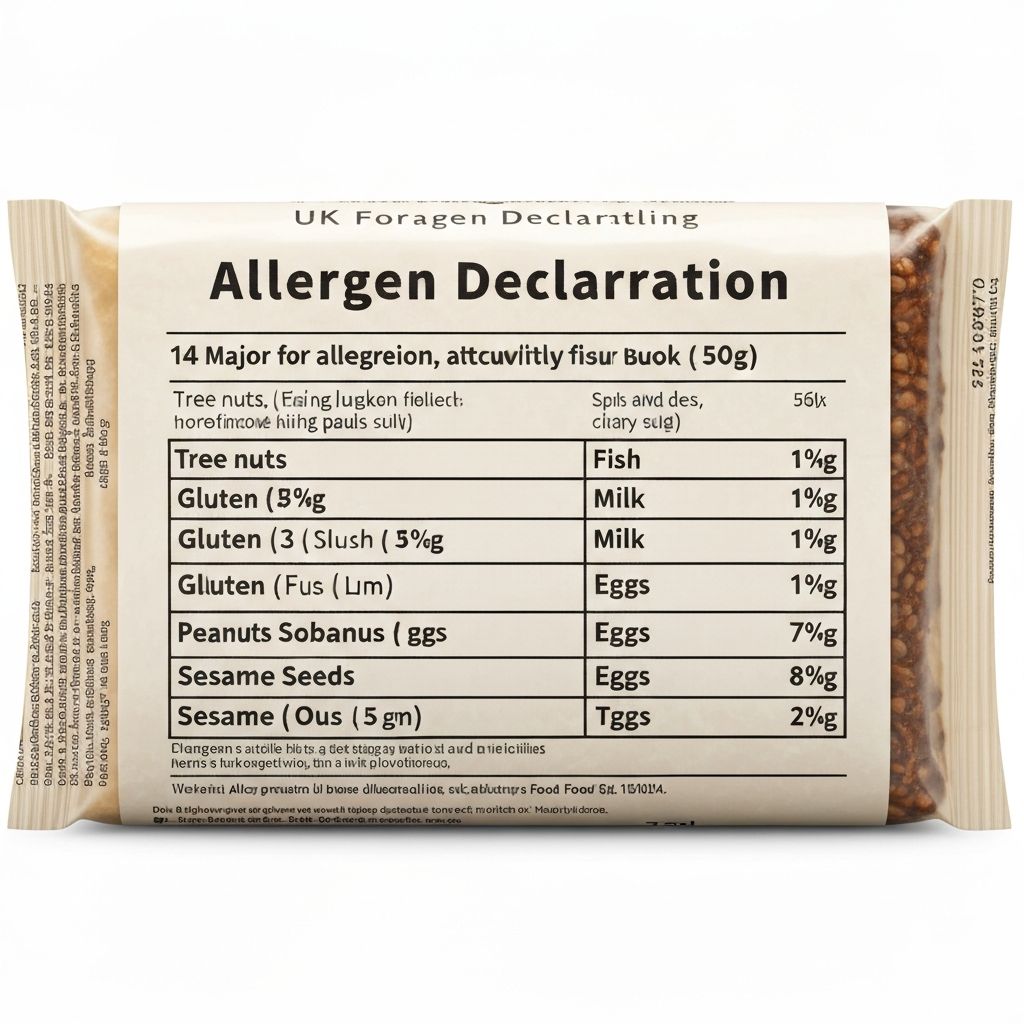
Allergen Labelling Requirements
Understanding the 14 major allergens and emphasis requirements.
Read More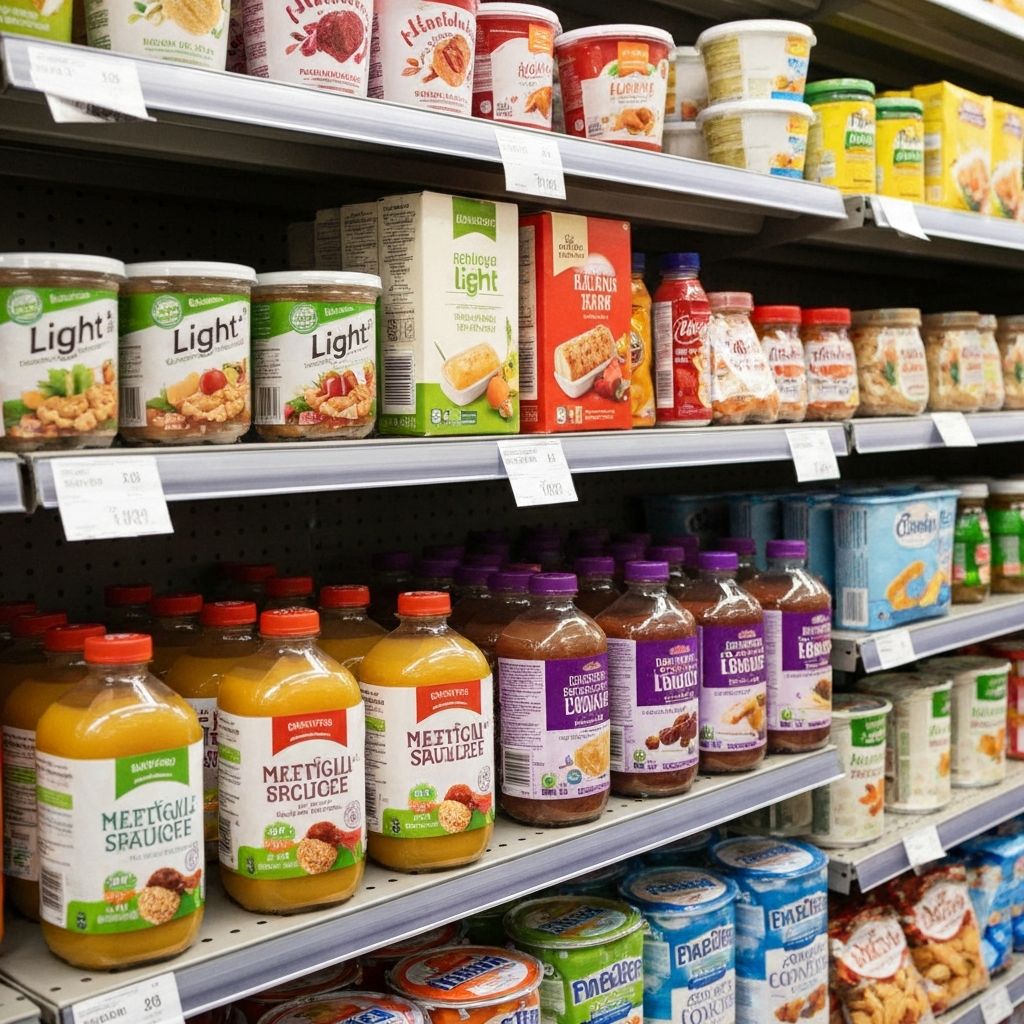
Legal Definitions of Marketing Terms
What "natural," "light," "low-fat," and "reduced" actually mean.
Read More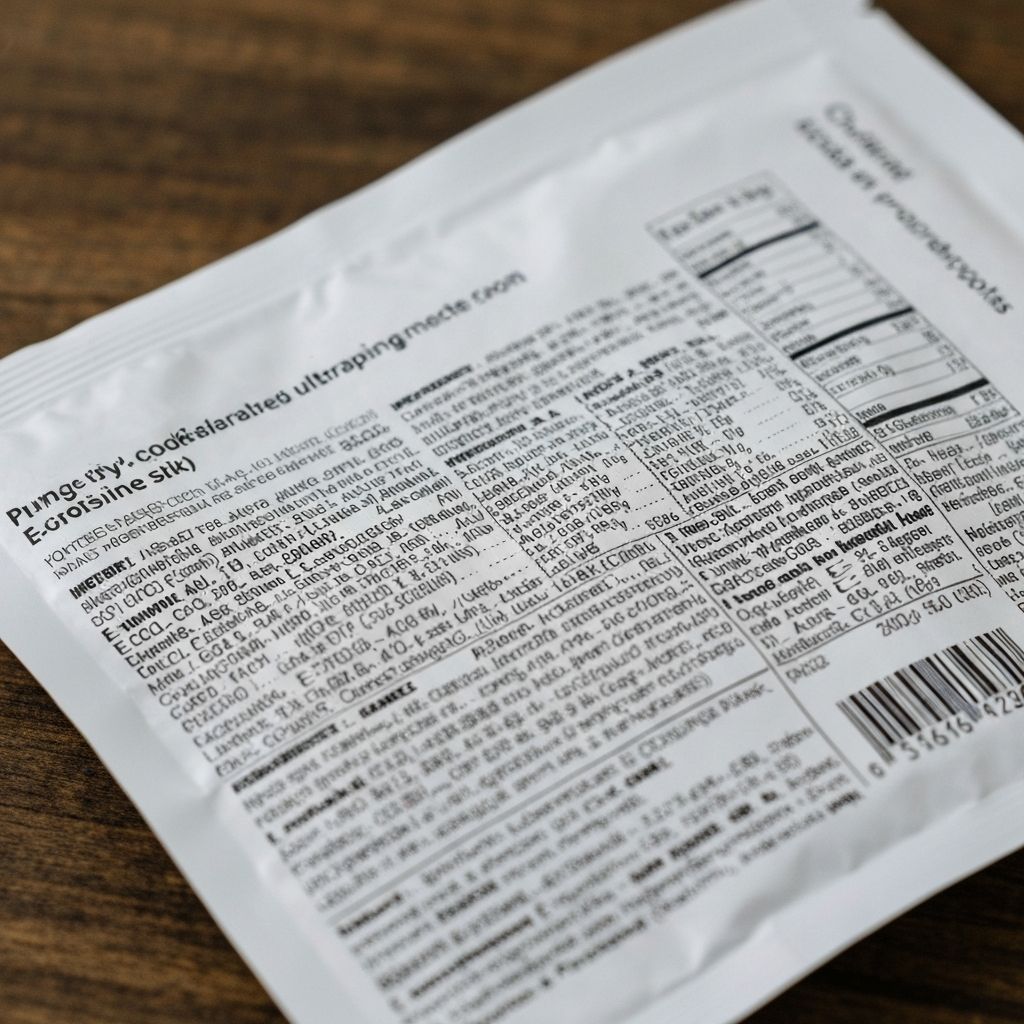
Identifying Ultra-Processed Foods
Recognising patterns in ingredient lists that indicate processing level.
Read MoreExplore More on Food Labelling
Labelux is an independent educational resource dedicated to explaining how to understand food labels and nutritional information in the United Kingdom. Our content is for informational purposes only.
Educational content only. No promises of outcomes.