Identifying Ultra-Processed Foods via Labels
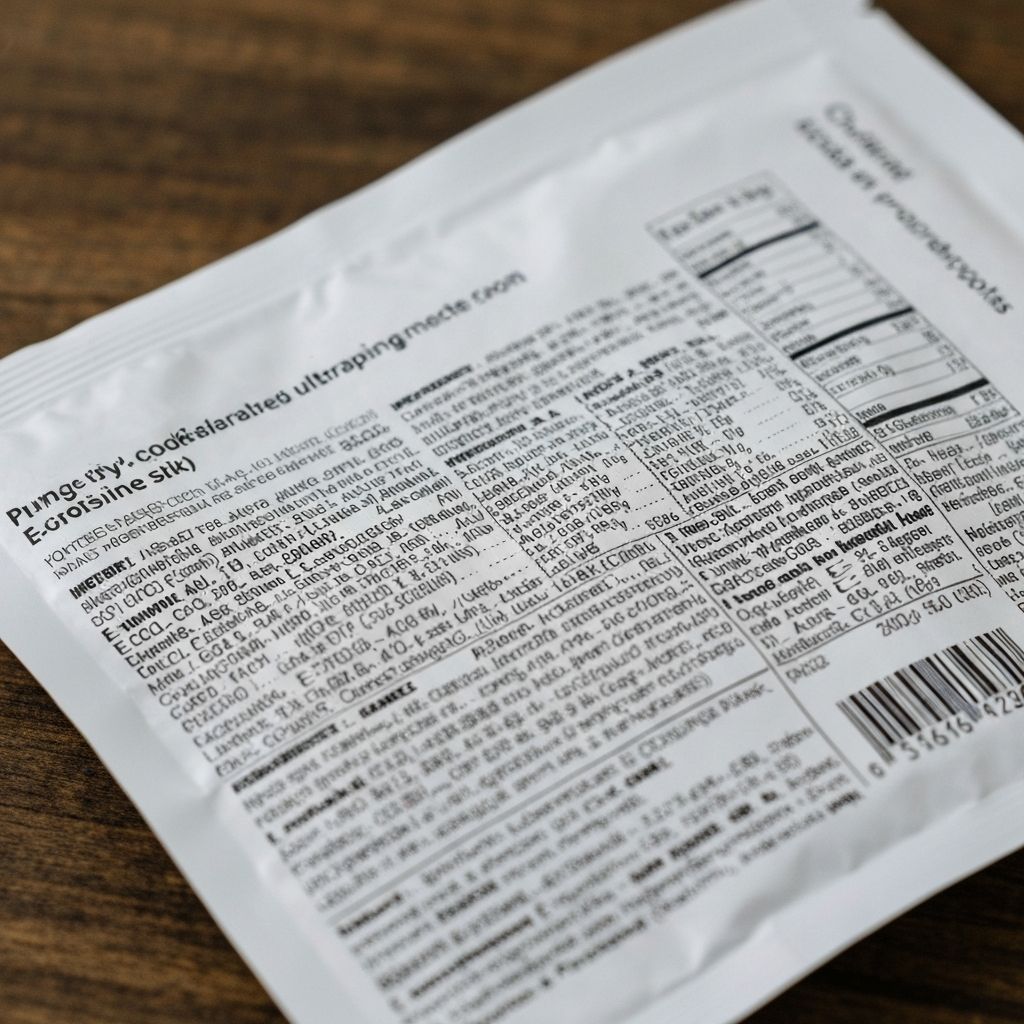
Ultra-processed foods can often be identified by examining the ingredients list on packaging. Understanding the patterns that indicate processing level provides information about food composition.
What Indicates Ultra-Processing
Ultra-processed foods typically share several characteristics visible in the ingredients list:
Long Ingredient Lists
Ultra-processed foods often have longer ingredient lists than less processed alternatives. A very long list with many unfamiliar or technical-sounding names suggests the product has undergone significant processing.
For comparison, a simple yogurt might list just "milk" and "live cultures," while a flavoured yogurt product might list "milk, sugar, fruit puree, modified corn starch, gelatin, natural flavourings, colourings (E150d), thickeners (E1442, E415)."
Multiple Additives
The presence of multiple E-numbers and additives indicates ingredients have been added for specific functional purposes beyond the basic food components.
Common additives in ultra-processed foods include:
- Emulsifiers and stabilisers (to maintain texture)
- Thickeners and gelling agents (to adjust consistency)
- Colourings and flavourings (to enhance appearance and taste)
- Preservatives (to extend shelf life)
- Anti-caking agents (for powder products)
Hydrogenated and Trans Fats
The presence of "hydrogenated" oils or fats indicates processing through hydrogenation. These fats are created through an industrial process and are associated with ultra-processed products.
Look for terms such as "hydrogenated vegetable oil," "partially hydrogenated oil," or "trans fat" in the ingredients list.
Multiple Sweeteners
Ultra-processed foods often contain multiple sweetening ingredients. A product might list both sugar and high-fructose corn syrup, or multiple artificial sweeteners. This suggests sweetness has been layered or engineered into the product.
Common sweeteners include:
- Sugar (by various names: sucrose, glucose, fructose, honey, agave nectar)
- Corn syrups (high-fructose corn syrup, glucose syrup)
- Artificial sweeteners (aspartame, saccharin, sucralose, stevia)
- Sugar alcohols (sorbitol, xylitol, maltitol)
Unrecognisable Ingredient Names
Ingredient names that are unfamiliar or sound technical may indicate industrial processing. Some examples include:
- Modified starch or modified corn starch
- Mono- and diglycerides
- Sodium tripolyphosphate
- Disodium inosinate and disodium guanylate
- Carrageenan, guar gum, xanthan gum
Comparison of Processing Levels
Minimally Processed
Example: "Oats" or "whole grains, honey, salt"
Processed
Example: "Wheat flour, sugar, vegetable oil, salt, baking powder"
Ultra-Processed
Example: "Wheat flour, high-fructose corn syrup, vegetable oil, modified corn starch, emulsifier (E471), colour (E150d), flavouring, preservative (E202)"
Understanding Processing Context
Not all processed foods are harmful. Processing can serve important functions such as preservation, safety, and convenience. The degree and nature of processing varies widely.
Understanding the ingredients list allows you to identify the processing level of products and make informed choices based on your own preferences and circumstances.
Reading the Full Label
While ingredients list complexity can indicate processing level, a complete understanding requires also checking:
- The nutrition information panel for energy, fat, sugars, and salt content
- Front-of-pack labelling for quick nutrient assessment
- Storage instructions (shelf-stable products may have more preservatives)
- Allergen information